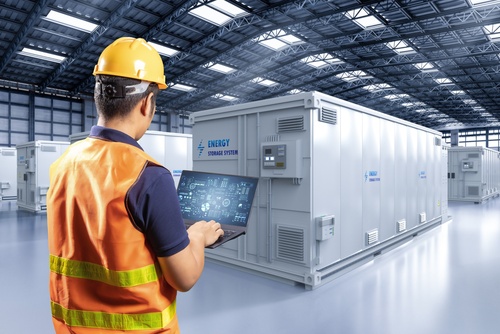
Brazil’s battery storage market is transitioning from first deployments to a scaling phase, even though the country is still lacking an enabling regulatory framework. Installed storage capacity tripled between 2023 and 2024, and while the country´s total installed storage capacity remains below 1 gigawatt hour (GWh), the growth signal is clear, according to energy consultancy Greener. Most deployments are still concentrated in isolated systems (predominantly in the Amazon region), which account for roughly 70 percent of total installed capacity, but commercial and industrial (C&I) use and other behind-the-meter-applications are rising, as companies and consumers seek higher reliability and lower energy bills.
The market’s recent trajectory is measurable: Greener reports that by 2024, Brazil had accumulated 685 megawatt hours (MWh) of installed storage capacity, with 269 MWh added in 2024 alone (a 29 percent increase versus 2023). Another 167 MWh was installed in the first half of 2025, taking the total to 852 MWh. Utility-scale deployment now hinges on policy. Brazil’s first battery capacity reserve auction, initially expected in 2025, is widely anticipated to slip to 2026, with the Brazilian Ministry of Mines and Energy (MME) placing the auction framework for in public consultation.
Industry interest is substantial: the Brazilian storage association ABSAE states that around 18 gigawatts (GW) of battery projects are ready to be registered for the next auction and estimates that contracting 2 GW could unlock roughly 10 billion Brazilian real (about 1.8 billion US dollar) in investment. ABSAE also points to a broader investment potential in the Brazilian battery storage sector of more than 44 billion Brazilian real (about 8.2 billion US dollar) by 2030.
Economics are improving and prices for average battery packs are falling. In parallel, Brazil’s high electricity tariffs make load shifting and peak shaving increasingly attractive. Transmission capacity shortages are another factor to add pressure on implementing batteries to the Brazilian electricity market. Yet a regulatory vacuum on licensing, grid use, and remuneration for services (arbitrage, capacity, ancillary services) continues to delay investment decisions.
The emerging battery storage production environment in Brazil could also give a boost to large-scale application. BYD has been operating a lithium phosphate battery production site in Manaus since 2017, and numerous other Chinese battery manufacturers are considering strategies for entering the market.
Brazil’s Northeast is emerging as a green hydrogen corridor: according to the industry platform Ceará H2V Hub, multi-gigawatt solar pipelines are being linked to prospective export terminals such as Pecém and Suape. BloombergNEF expects Brazil could reach about 3.8 GW production capacity by 2030 and achieve costs down to 1.45 US dollar per kg.
The Noronha Verde PV-BESS hybrid power plant in Pernambuco combines 49 MWh BESS with 22 megawatt peak (MWp) PV. The first phase of the project developed by Neoenergia should enter operation in 2026, the project rounds an investment sum of 350 million Brazilian real (about 65 million US dollar).
State-owned oil company Petrobras is building the first green hydrogen pilot project in Rio Grande do Norte, entering operation in 2026. The investment sum is 90 million Brazilian real (about 16.8 million US dollar).